Trump Administration Prepares Backup Tariff Plan Ahead of Supreme Court Ruling
Trump Administration Prepares Backup Tariff Strategy Ahead of Supreme Court Decision The Trump White House is preparing alternative tariff plans as it awaits a crucial Supreme Court ruling that could overturn one of its key trade authorities. Sources familiar with the matter reveal that both the US Commerce Department and the Office of the US
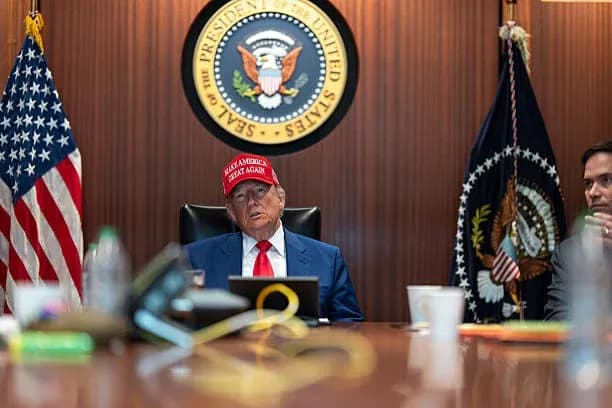
Trump Administration Prepares Backup Tariff Plan Ahead of Supreme Court Ruling
Trump Administration Prepares Backup Tariff Strategy Ahead of Supreme Court Decision
The Trump White House is preparing alternative tariff plans as it awaits a crucial Supreme Court ruling that could overturn one of its key trade authorities. Sources familiar with the matter reveal that both the US Commerce Department and the Office of the US Trade Representative are studying fallback options to quickly reinstate tariffs if the Court invalidates the administration’s current approach.
Possible Backup Options: Section 301 & Section 122
Officials say the administration is examining tariff tools such as Section 301 and Section 122 of the Trade Act — both of which grant the president unilateral power to impose duties.
However, these mechanisms come with limitations, including slower implementation timelines and narrower authority, and they may also face fresh legal challenges.
Despite this, the administration appears determined to maintain strong tariff policies. President Trump has repeatedly urged the Supreme Court to uphold his emergency tariff powers, introduced under the International Emergency Economic Powers Act (IEEPA).
White House Braces for Uncertain Ruling
The Supreme Court could either uphold the tariffs, strike them down entirely, or issue a more limited ruling. A negative outcome would create uncertainty for businesses and global partners — and could force the government to refund more than $88 billion in collected duties.
Still, administration officials say tariff measures will remain central to Trump’s economic strategy regardless of the Court’s decision.
IEEPA Tariffs at the Center of Legal Battle
The legal clash revolves around Trump’s use of IEEPA to impose “reciprocal tariffs” on imports from around the world — as well as targeted duties on China, Canada, Mexico, and Brazil. These tariffs currently contribute to over half of the United States’ effective tariff rate, now estimated at 14.4%.
Experts expect that, if the Court strikes down IEEPA-based tariffs, the administration will look to rapidly reintroduce similar duties through alternative tools.
Section 301 Already in Motion
The administration has already launched a Section 301 investigation into Brazil, and still maintains Section 301 tariffs against Chinese goods from Trump’s first term. However, this route generally requires extensive investigations before duties can be applied.
National Economic Council Director Kevin Hassett and other senior officials suggest that Sections 301, 122, or 232 could be used to rebuild the tariff system if IEEPA is ruled unconstitutional.
Limitations of Section 122
Section 122 allows tariffs up to 15% for a maximum of 150 days, but the narrow time limit makes it impractical for long-term trade strategy. Officials are exploring whether tariffs could be reset, canceled, or reapplied to work around this restriction — though such actions could trigger more legal disputes.
Expanding Use of Section 232
The administration has also expanded the use of Section 232 tariffs on steel, aluminum, autos, and other sectors. Some experts speculate that these growing investigations might be part of a broader backup plan if IEEPA powers are limited.
A Risky Legal Landscape Ahead
Another potential tool, Section 338, has never been used before and would almost certainly invite significant litigation. Analysts warn that a shift to alternative tariff measures could create administrative chaos and lead to months of uncertainty across global markets.
Still, senior White House officials maintain optimism that the Supreme Court may rule in their favor — and if not, they insist the administration already has the tools needed to rebuild the tariff system quickly.
Also Read : Trump Unveils $175 Billion ‘Golden Dome’ Missile Defense Shield with Space-Based Lasers
Related Stories

The Fire Is Never Gone, It Is Buried: Allisa Verhille on Reigniting High-Achievers Before Burnout Costs Them Everything
Allisa Verhille has delivered nine-figure results, stood on the stages of Oxford and Columbia, and built organizations from almost nothing to extraordinary scale. But the story that matters most began at a bathroom sink, years into a career that looked perfect from the outside, the night she looked into the mirror and did not recognize the woman looking back.
Change of British High Commissioner to New Zealand
Ms Louise Cantillon has been appointed British High Commissioner to New Zealand and Governor of the Pitcairn, Henderson, Ducie and Oeno Islands.
Trump signs order to limit childhood vaccines and split MMR shots
The American Academy of Pediatrics calls the recommendation on measles, mumps and rubella shots "dangerous".