Imagination Is Our Human Superpower: Prof. Penny Hay on Why Every Child Is Already an Artist
Prof. Penny Hay holds a title that does work before she says a single word: Professor of Imagination. In a world of educational metrics, league tables, and STEM priorities, that title stakes a deliberate claim — that imagination isn't peripheral to education. It's the substance itself, the foundational human capability from which everything education is supposed to produce actually grows.
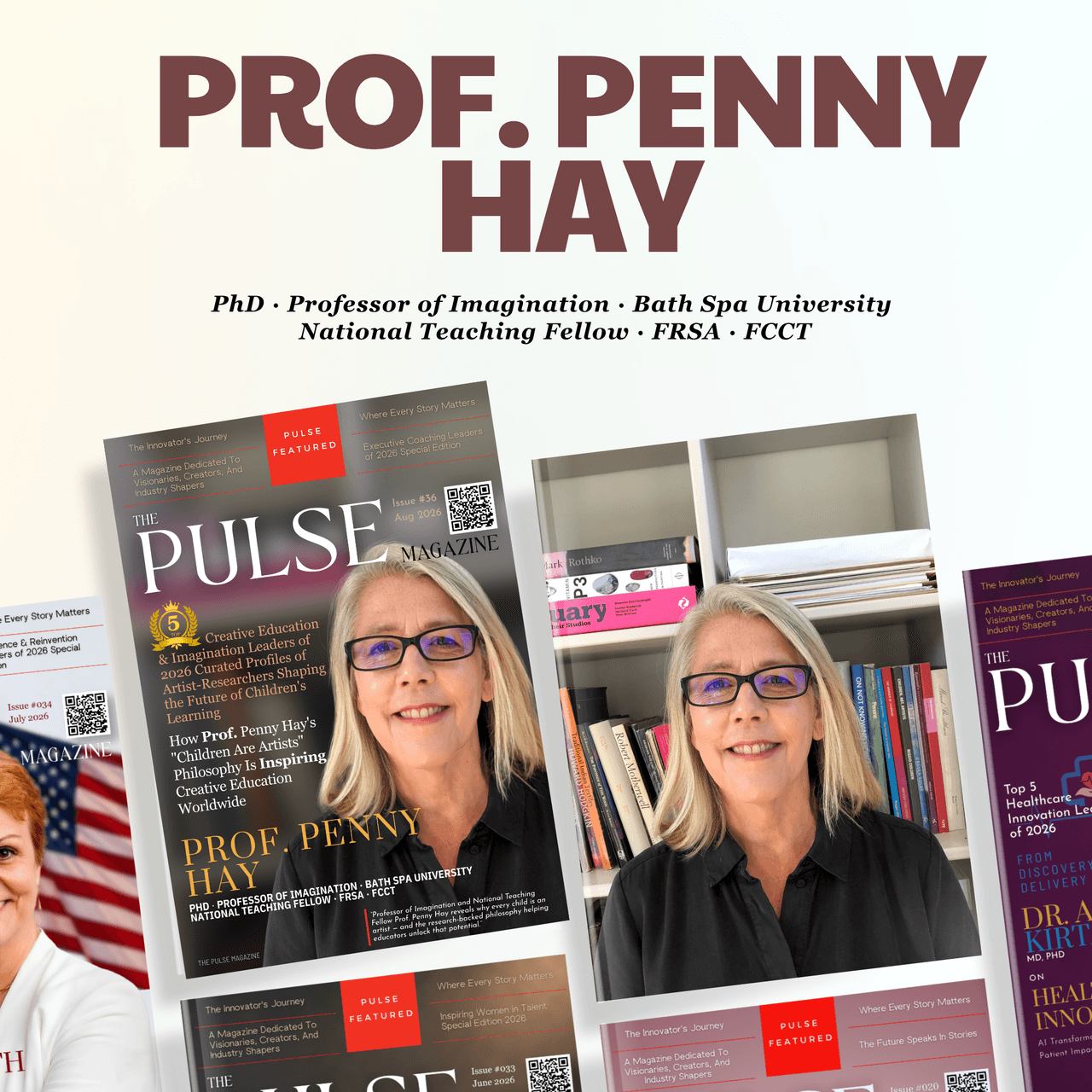
A National Teaching Fellow, Fellow of the Royal Society of Arts, Fellow of the Chartered College of Teaching, and Founding Director of House of Imagination at Bath Spa University, Hay's profile in The Pulse Magazine's Creative Education Leaders 2026 Special Edition captures forty years of research, practice, and advocacy built around one core conviction: every child is already an artist.
Who Is Prof. Penny Hay?
Penny Hay is Professor of Imagination at Bath Spa University, PhD, National Teaching Fellow, FRSA, and FCCT. She is the Founding Director of House of Imagination, a charity and studio for creative learning that treats the city itself as campus and co-founder of three signature projects: School Without Walls, Forest of Imagination, and Playful Green Planet.
Her doctoral research became the 2023 monograph Children are Artists, and her artist-researcher methodology has been applied across projects in the UK, Europe, and India, including the AHRC Global Challenges Compound 13 Lab in Mumbai and the Erasmus+ Interstice project spanning multiple European countries. She counts Sir Ken Robinson among her mentors a relationship that shaped her thinking as both Patron of House of Imagination and a profound influence on her intellectual project.
The Title That Makes People Think Twice
Hay is candid about why her title matters. Most educational systems treat imagination as peripheral pleasant, but dispensable material that makes the “real” curriculum more palatable. Hay was given the title Professor of Imagination because she believes the opposite.
"Imagination is not an optional extra. It is central to how we learn, how we live together, and how we create more just, sustainable and flourishing futures. It is our human superpower." — Prof. Penny Hay
In her formulation, imagination is a fundamental human capability at the heart of creativity, learning, and cultural transformation — the capacity that enables us to explore possibilities, create new narratives, and nurture curiosity, wonder, and agency. Without it, education becomes the efficient transmission of existing knowledge. With it, education becomes participation in the ongoing creation of the world.
Children Are Artists: A Claim That Is Simple and Revolutionary
Four words, children are artists and challenge, if taken seriously, the fundamental premises of how most educational systems understand children, childhood, and the purpose of education itself. Hay didn't arrive at this conclusion as a slogan. It's the evidenced outcome of years of doctoral research, organised around four strands: creative values, environments, relationships, and dispositions.
The claim is that artistic potential isn't a seed to be cultivated under the right conditions someday, children are artists, present and already, and the entire orientation of arts education should follow from that. This reframes the relationship between teacher and learner as companionship in inquiry rather than transmission of knowledge, where each student brings something fresh to every learning situation: unfiltered perception, particular quality of attention, and a child's question that becomes as important as the teacher's response.
"Children think through their hands, hearts and minds. The spaces we create can either expand or limit their exploration." — Prof. Penny Hay
House of Imagination: Learning Is Everywhere
House of Imagination emerged from Hay's commitment to exploring imagination's transformative potential in learning, culture, and civic life. It reconceptualises the curriculum with the city as a campus for learning, a studio environment where children and young people work alongside artists and creative professionals as role models.
Three signature projects, developed in partnership with Bath Spa University and city partners in Bath, put that philosophy into practice:
- School Without Walls — dissolves the boundary between the school building and the city around it, treating the urban environment and its architecture, communities, histories, living systems, and cultural institutions, as material for inquiry and discovery.
- Forest of Imagination — places children in sustained, open-ended engagement with living environments: forests, fields, gardens, outdoor spaces. Hay observed that children's attentiveness deepens, their sense of connection to place and to each other becomes more vivid, and their imaginative engagement becomes more sustained.
- Playful Green Planet — extends this into the ecological dimension, connecting children's embodied experience of being in nature with the larger questions of ecological relationship and responsibility they will navigate throughout their lives.
"Learning is at its most powerful when it is invitational, immersive and imaginative. Children gathered beneath the living tree, quietly observing in wonder — that is where education lives." — Prof. Penny Hay
The Living Tree Moment
One image from Hay's fieldwork has stayed with her with particular vividness: children gathered beneath the Living Tree in Forest of Imagination, quietly observing in wonder. What made the moment significant wasn't its dramatic quality, it was the quality of the children's engagement: absorbed attentiveness, presence, and a sense of connection between the children and the living organism above them. A quality of engagement, she notes, that's rarely produced even by the most carefully designed classroom environment.
From that quality of encounter, Hay has observed, significant things follow: children develop empathy, a sense of belonging, and a stronger sense of themselves as confident contributors to the world around them, developmental significance that goes beyond what can be measured in academic outcome data.
Making and Knowing: The Artist-Researcher
Hay describes herself as an artist-researcher, a deliberate and precise term, not a casual description of doing two things at once. It's a claim about the relationship between making and knowing, between the embodied intelligence of artistic practice and the analytical intelligence of academic research, held together in creative tension rather than separated into distinct, non-communicating disciplines.
Her international collaborative work and including the Compound 13 Lab in Mumbai, undertaken as part of the AHRC Global Challenges programme, and the Erasmus+ Interstice project across multiple European countries, exemplifies what the artist-researcher identity makes possible in cross-cultural, collaborative research: bringing communities, artists, educators, and researchers together to engage with questions of waste, creativity, and transformation through a combination of artistic practice and rigorous inquiry.
"What does the artist bring to research that the academic alone cannot access? Attentiveness, material engagement, reflection, and embodied forms of knowing." — Prof. Penny Hay
Teaching Is a Creative Act
As a National Teaching Fellow, one of the highest recognitions for teaching excellence in the United Kingdom, Hay's pedagogical philosophy begins not with technique but with belief: a belief in the imagination and creative potential of every person. Creativity, in her account, is not a skill to be developed through the right kind of instruction. It's a way of being in the world, an orientation towards oneself, towards other people, towards materials and ideas and possibilities and that is not the product of education but the starting point from which genuine education can begin.
"Children think through their hands, hearts and minds. Education is fundamentally about supporting people to develop a sense of self, a sense of belonging, and a sense of responsibility towards others and the world." — Prof. Penny Hay
The Policy Fight Still to Be Won
Hay has worked across the full range of the creative education landscape, from the intimacy of the studio and classroom to the institutional context of arts policy and including designing the Artist Teacher Scheme with Arts Council England, advisory roles with the Cultural Learning Alliance, RSA, HundrED, and the Crafts Council.
Her policy argument is direct: the most important shift still to be made is recognising arts and culture as a core entitlement for every child, rather than an optional addition to education contingent on which school a child happens to attend.
"The arts are not an optional enrichment activity. They are an essential part of our shared cultural and democratic life. Every child deserves this as a right, not a reward for completing the given curriculum." — Prof. Penny Hay
What's Lost If We Don't Act
Hay is unflinching about the stakes. If education systems continue to treat creativity as optional rather than fundamental, the losses compound, individually, in children who develop a diminished sense of what's possible for their own lives; and collectively, in a society less capable of imagining the alternatives that its most urgent challenges demand.
"Across forty years and many generations, I have seen the same deep capacity for wonder, attentiveness and cultural contribution when children are given time, trust and encouragement." — Prof. Penny Hay
Her closing conviction ties the entire body of work together: when we nurture imagination and creativity, we nurture human potential. The futures worth building and more just, more sustainable, more flourishing, won't be created by people educated only to navigate the existing order of things. They'll be created by people who can imagine differently.
Key Takeaways for Educators and Policymakers
- Imagination is foundational, not decorative — it's the capability from which creativity, learning, and cultural participation actually grow.
- Children are artists now, not artists-in-waiting — arts education should start from present capability, not future potential.
- Learning happens everywhere — in relationships, materials, places, and encounters with the natural world, not only inside classroom walls.
- The artist-researcher model bridges two ways of knowing — embodied, material intelligence and analytical, academic rigor, held in creative tension.
- Arts access should be a structural entitlement — guaranteed by policy and funding, not dependent on which school or teacher a child happens to get.
This feature is based on Prof. Penny Hay's profile in The Pulse Magazine's Creative Education Leaders 2026 Special Edition. Prof. Penny Hay is Professor of Imagination at Bath Spa University, National Teaching Fellow, FRSA, FCCT, and Founding Director of House of Imagination.
Read more from The Pulse Magazine: thepulsemagazines.com | Follow us on LinkedIn and Instagram @thepulsemagazines
Related Stories
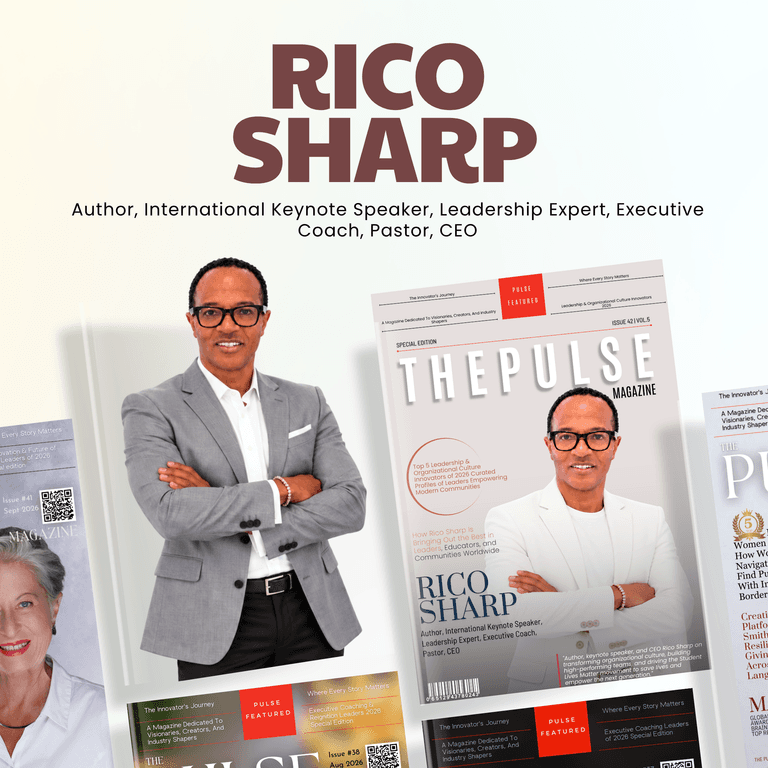
The WHO Factor: How Rico Sharp is Redefining Leadership and Organizational Culture
Author, international keynote speaker, and CEO. Beginning his transformational journey from a prison cell at age nineteen, Rico Sharp has spent three decades empowering leaders and communities worldwide. In this exclusive Pulse Magazine feature, Sharp reveals why organizations must hire for the "WHO" (character and integrity) rather than just the "WHAT" (credentials). He shares the philosophy behind his renowned leadership academies and explains how the Student Lives Matter movement is shifting the national paradigm from reactive crisis response to proactive violence prevention.
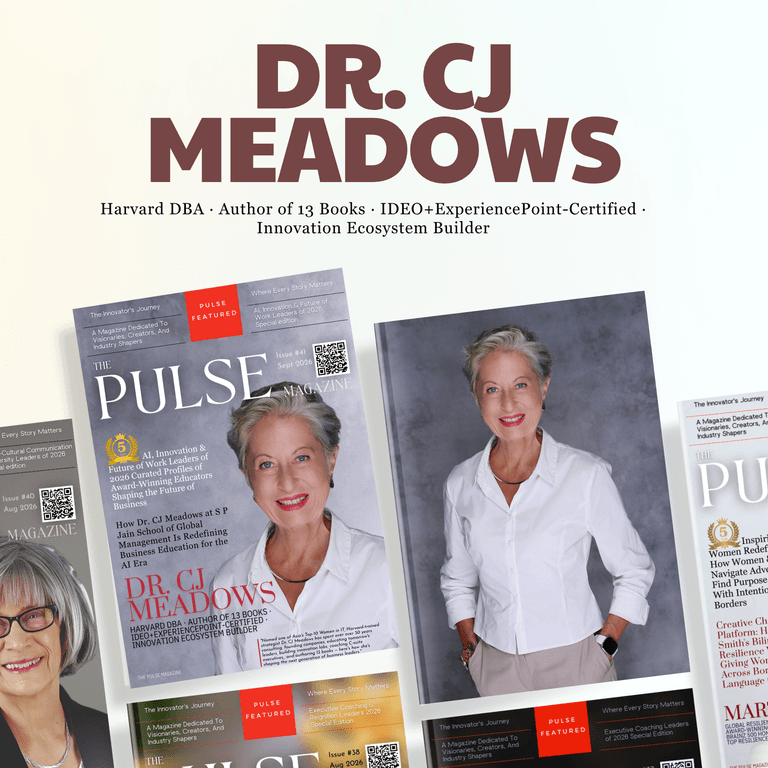
Augmenting Humanity: How Dr. CJ Meadows is Redefining Business Education for the AI Era
Harvard DBA. Author of 13 books. IDEO+ExperiencePoint-certified facilitator and innovation ecosystem builder. In this exclusive Pulse Magazine feature, Dr. CJ Meadows reveals why generative AI will not replace human leaders, but rather augment them to focus on what humans do best. Drawing on over three decades of consulting and teaching, she shares the design thinking philosophy shaping executives at S P Jain School of Global Management, and explains why true digital transformation is always 75% human work.
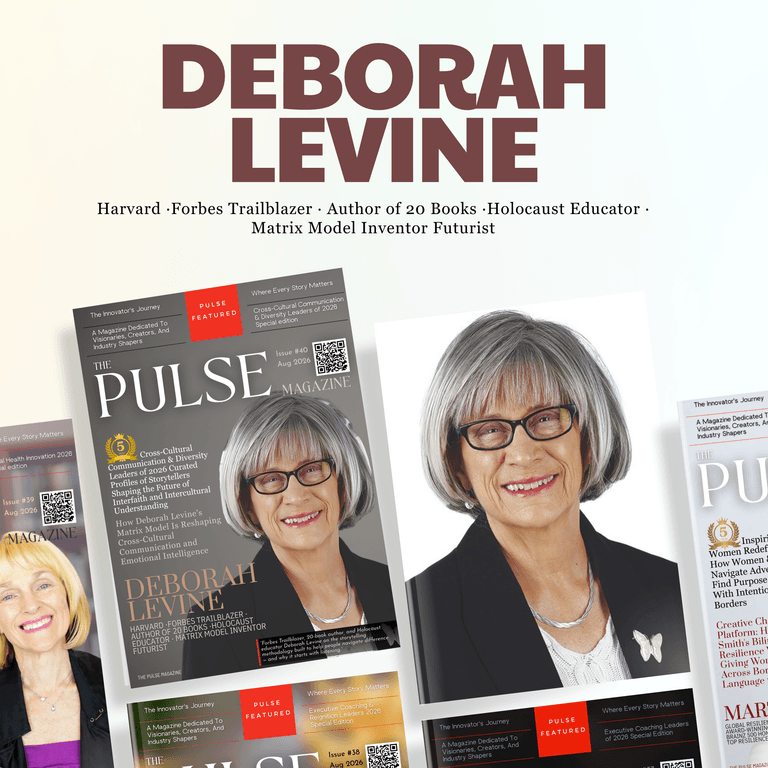
How Deborah Levine's Matrix Model Is Reshaping Cross-Cultural Communication and Emotional Intelligence
One month before September 11th, she founded a diversity council in a small Southern city. Then the towers fell, and dialogue was no longer enough. In this exclusive Pulse Magazine feature, Harvard-educated Forbes Trailblazer Deborah Levine reveals how that moment of crisis gave rise to the Matrix Model — a cross-cultural framework now used at Fortune 500 corporations and international AI conferences. She shares why storytelling, not policy or research, is the technology that actually builds cross-cultural intelligence, and why restoring our humanity across difference is no longer optional.