Escaping the Healthcare Hamster Wheel: How Charles Gragg is Transforming Corporate Balance Sheets
Healthcare strategist, author, and professional speaker Charles Gragg has spent over 45 years exposing a brutal truth to the C-suite: if you buy traditional health insurance, you are merely renting a plan and handing a blank check to a monopoly. In this exclusive Pulse Magazine feature, Gragg breaks down his best-selling playbook, "Get Off the Hamster Wheel." He reveals how visionary employers are transitioning to self-funding, utilizing captive risk strategies, and leveraging continuous education to convert out-of-control healthcare liabilities into powerful corporate assets.
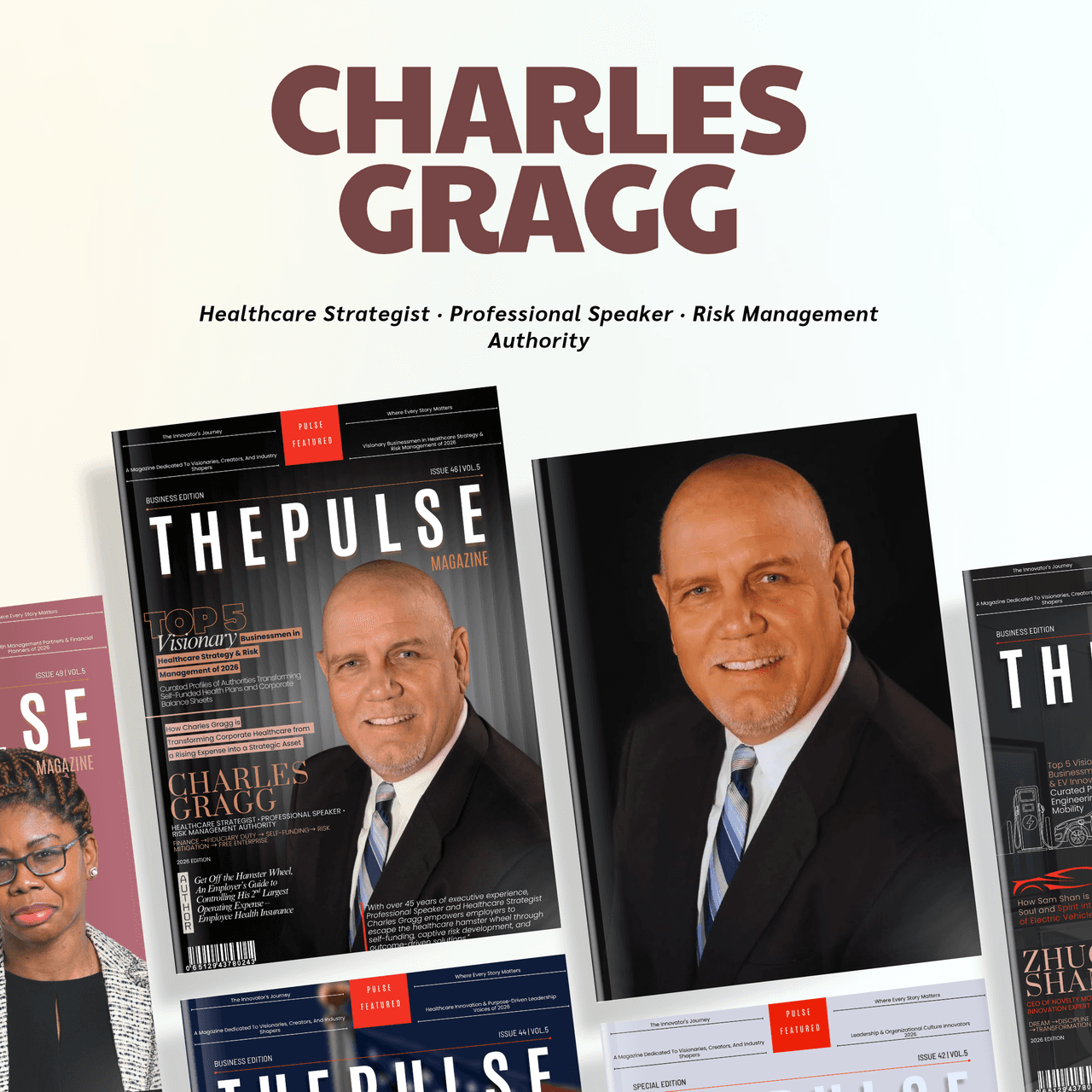
There is a version of corporate healthcare that is universally accepted by the modern C-suite: it is an uncontrollable, agonizing expense that inevitably drains a company’s balance sheet year after year. Charles Gragg, a pioneering healthcare strategist with over 45 years of executive experience, refuses to accept that narrative.
Gragg proves that employers are not victims of the healthcare system—they are simply playing by the wrong set of rules. His philosophy is built on a radical, unyielding premise: if a CEO purchases traditional, fully-insured healthcare, they are not running a business; they are merely renting a health plan and handing a blank checkbook to giant insurance carriers.
Through the strategic vehicles of self-funding and captive risk management, Gragg teaches visionary leaders how to take absolute ownership of their health plans, converting a massive corporate liability into a powerful strategic asset. Here is how he is aggressively dismantling the traditional insurance monopoly and restoring the principles of Free Enterprise to American healthcare.
The Origin Story: Finance, Football, and Fiduciary Duty
The foundation of Charles Gragg’s transformative five-decade career was not built in a hospital, but on the rigorous athletic fields of Division 1 NCAA football and within the demanding academic environment of corporate finance. Armed with a Bachelor of Science in Business Management, he entered the workforce in 1976, understanding that true leadership is forged through physical discipline and relentless teamwork.
Shortly after, Gragg stumbled upon a disruptive financial vehicle known as "Self-Funding." Unlike traditional models where employers surrender non-refundable premiums to conglomerates, self-funding allows visionary companies to finance their own healthcare through internal capital. Inspired, Gragg dove into the industry in 1978, realizing this was a structural redesign of how American businesses managed their most unpredictable liabilities.
He quickly learned a profound legal distinction: advising on self-funded plans required acting as a designated "Fiduciary" under federal oversight from the Department of Labor. Acting as a fiduciary meant possessing an uncompromising legal and moral obligation to care for another party’s finances with an even greater degree of diligence than one would apply to their own personal wealth. This mandate permanently defined his professional ethos.
“If a CEO purchases health insurance through traditional, fully-insured markets, they are not running a business; they are merely renting a health plan and handing a blank checkbook to a giant corporation.”
Get Off the Hamster Wheel: The Employer’s Playbook
After 45 years of witnessing employers suffer under the crushing weight of traditional healthcare costs, Gragg authored the definitive corporate survival guide: "Get Off the Hamster Wheel: An Employer's Guide to Controlling His 2nd Largest Operating Expense - Employee Health Insurance."
The book serves as an aggressive, highly practical playbook. The most crucial takeaway is a radical shift in perspective: the CEO must forcefully take back control by seizing ownership of the health plan, ripping it away from giant carriers, and transitioning to a self-insured model.
Once ownership is secured, Gragg introduces 15 to 20 highly effective, proven methodologies to aggressively control claims costs. By implementing sophisticated cost-containment strategies, employers routinely save 20% to 40% of their traditional health insurance liability. Most importantly, this massive financial savings is achieved without cutting employee benefits; in fact, the benefits are significantly enhanced, driving superior clinical outcomes.
Transforming the Balance Sheet: The Mechanics of Self-Funding
Gragg aggressively teaches corporate executives that by taking ownership of their health plan, an employer can transfer their healthcare liability from the expense side of the ledger directly to the asset side. He dissects the bloated, opaque insurance "premium" into three manageable components:
- Clinical Claims: The everyday medical expenses. The strategic advantage of self-funding is that allocated money remains in an employer-owned account until explicitly required to pay a valid, audited claim.
- The Reserve Fund: Instead of allowing a commercial carrier to hold massive reserves and pocket the interest, the self-funded employer retains that capital (generally 10-15% of the total spend).
- Stop-Loss Insurance: Securing robust risk protection to cover catastrophic, unpredictable medical events, transferring the risk away from the employer’s operating budget.
Shattering Misconceptions and The Captive Risk Strategy
When Gragg introduces self-funding to a boardroom, he is inevitably met with entrenched misconceptions. CEOs often ask why their current benefits advisor never recommended it. Gragg’s response is brutally honest: traditional advisors are fiercely financially disincentivized, receiving lucrative, hidden legacy bonuses from giant carriers strictly for maintaining the profitable status quo.
Another hurdle is the fear of "shock losses"—devastating, unpredictable financial risks like a premature birth or aggressive cancer. Gragg explains that it is illogical for an employer to absorb this volatile risk when they can easily transfer it to a Stop-Loss insurance policy. For mid-sized organizations, Stop-Loss premiums can consume 25% to 30% of the budget.
To reclaim these profits, Gragg advocates for the "Captive Risk Strategy." Utilizing a Captive Insurance entity allows the employer to literally "own the risk segment" of their health plan. By cutting out the traditional middleman, employers retain the massive underwriting profits that would normally enrich a commercial carrier.
To manage the complex day-to-day operations without creating administrative disruption, the CEO hires a fiduciary Third-Party Administrator (TPA), identical to how they would hire a CFO for corporate accounting.
“The Captive entity pathway allows the visionary employer to literally 'own the risk segment' of their health plan, cutting out the traditional insurance middleman and retaining the massive underwriting profits.”
Building a Protective Culture and Empowering Employees
Gragg emphasizes that health insurance is a vital, dynamic culture of financial protection, not a static product set on autopilot. Once an employer breaks free from the rigid anniversary dates imposed by traditional insurance monopolies, they gain immense agility. Minor tweaks and aggressive cost-containment strategies can be implemented instantaneously the moment a new health issue surfaces.
This transformation requires continuous, targeted educational campaigns. A single, generic enrollment meeting in November is fundamentally incapable of changing entrenched human behavior. The Benefits Advisor and TPA must operate as an educational strike team, actively educating employees on the benefits of Direct Primary Care Providers (DPC) and elite Centers of Excellence.
This process illuminates financial and clinical disparities, creating a brilliant, self-correcting ecosystem where the financial incentives of both the employer and the employee are perfectly aligned toward elite clinical quality.
Methodology Breakdown: Core Pillars of the Gragg Framework
Charles Gragg’s five-decade career has yielded a sequential, highly actionable framework for healthcare leadership:
- Finance: Forcing a confrontation with unmanageable expenses and recognizing traditional insurance as a "rented" liability.
- Fiduciary Duty: Unearthing the uncompromising moral and legal obligation to protect corporate and employee assets from opaque carrier models.
- Self-Funding: Moving the health plan from rented to owned through aggressive market disruption and internal capital management.
- Risk Mitigation: Solidifying how a company adapts to catastrophic claims using Stop-Loss insurance and Captive Risk strategies.
- Free Enterprise: Turning internal realization into systemic market movement, prioritizing transparency and clinical quality over volume.
Actionable Takeaways for the C-Suite
- Stop Renting Your Health Plan: If you use a fully-insured carrier model, you are handing a blank check to a monopoly. Transition to self-funding to own your data and your capital.
- Demand Fiduciary Accountability: Only work with Third-Party Administrators (TPAs) and advisors who are legally bound by fiduciary duty, eliminating hidden broker commissions.
- Educate Continuously: Abandon the single November enrollment meeting. Conduct quarterly educational campaigns to transform your employees into intelligent consumers of healthcare.
- Leverage Captive Risk Structures: Don't just buy Stop-Loss insurance; use a Captive entity to own the risk segment and retain the underwriting profits for your organization.
Restoring Free Enterprise to American Healthcare
As Charles Gragg looks toward the future, his vision is fiercely optimistic. He anticipates a massive technological evolution, advocating for an advanced, AI-driven national registry that transparently grades health providers based on elite clinical outcomes rather than sheer volume.
He is adamant that further government intervention is not the solution; the ultimate answer lies in restoring the principles of Free Enterprise to the American healthcare system. Transparency and operational efficiency will drive costs down. Gragg's legacy is defined by his relentless fight to ensure that no employer is ever trapped on the hamster wheel again.
About This Special Edition
This deep-dive feature is a cornerstone of The Pulse Magazine’s Visionary Businessmen in Healthcare Strategy & Risk Management of 2026 Special Edition. We are dedicated to spotlighting the industry shapers, creators, and bold visionaries who are actively defining tomorrow’s global enterprise. Charles Gragg’s relentless pursuit to dismantle the traditional insurance monopoly and empower corporate leaders perfectly embodies our editorial conviction: every story matters, and real transformation requires challenging the status quo. We invite you to explore the rest of this special edition to discover the actionable blueprints driving the future of corporate risk management.
Read more from The Pulse Magazine: thepulsemagazines.com | Follow us on LinkedIn and Instagram @thepulsemagazines
Related Stories
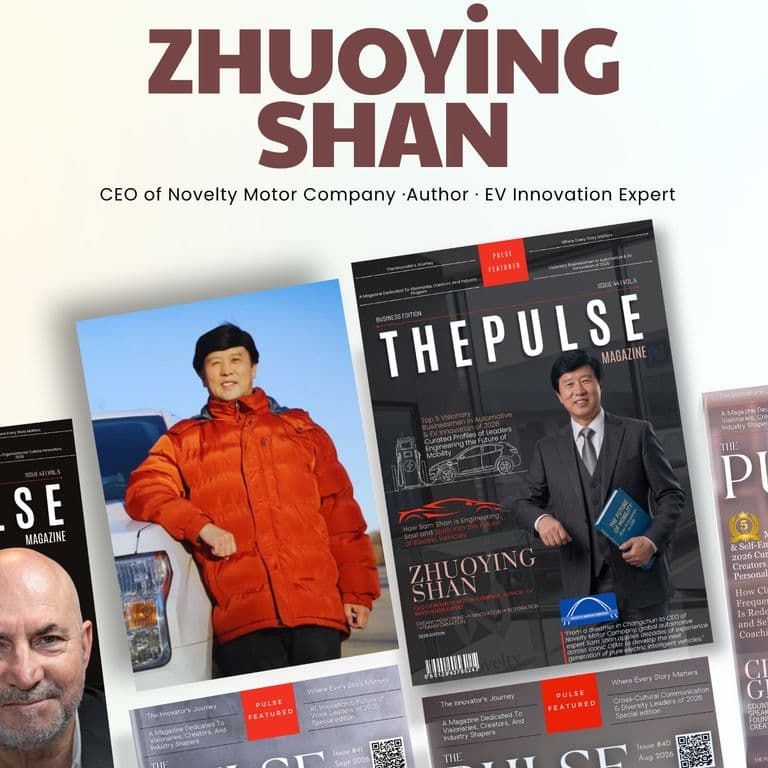
Engineering Soul into the Machine: How Sam Shan is Forging the Future of Electric Vehicles
From a dreamer in Changchun to the CEO of Novelty Motor Company, global automotive expert Zhuoying (Sam) Shan applies decades of experience across iconic OEMs like - Ford, GM, and Porsche, to develop the next generation of pure electric intelligent vehicles. In this exclusive Pulse Magazine feature, he reveals why advanced technology like steer-by-wire and AI must be infused with human empathy, and how he is engineering "soul and spirit" into the future of mobility.
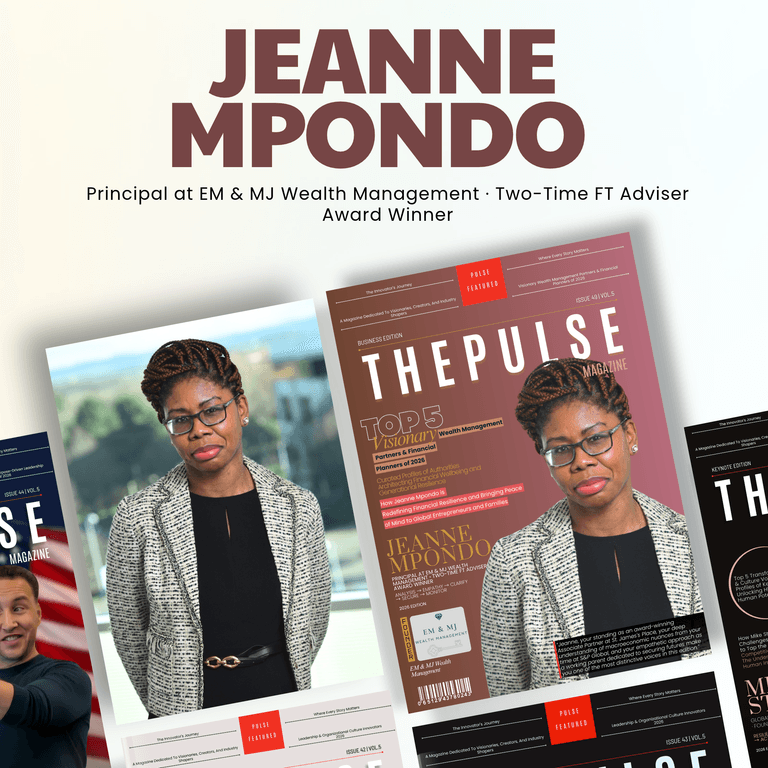
The Architecture of Empathy: How Jeanne Mpondo is Redefining Wealth Management
Former S&P Global Senior Data Analyst turned Principal at EM & MJ Wealth Management, Jeanne Mpondo, reveals how she translates complex macroeconomic data into deeply personal financial peace of mind. As a two-time FT Adviser Award winner and Associate Partner at St. James's Place, Mpondo discusses navigating cross-border complexities, managing the emotional weight of the Great Wealth Transfer, and why true financial inclusion means making advice accessible for women and global entrepreneurs.

🚀 Fuel Your Next Move: Why MYND Sparkling Protein Water is Your New Must-Have!
Let’s be honest: finding a protein drink that is actually refreshing is tough. Most protein shakes are thick, heavy, and packed with artificial junk. Plus, considering the NIH estimates that 36% of people in the United States have lactose malabsorption, those traditional milky shakes can leave many of us feeling bloated and sluggish. That’s exactly why we are so excited to introduce you to a game-changer that is hitting our radar (and soon, your fridge): MYND Drinks.