Championing People & Culture: How Chow Song Chee Redefines Leadership in Modern Organizations
A powerful exploration of Chow Song Chee’s leadership journey, focusing on people, culture, and building inclusive, high-performance organizations.

Chow Song Chee people and culture leadership inclusive workplace strategy
Introduction: The Shift from Systems to People
What truly drives an organization forward?
Is it strategy?
Technology?
Performance metrics?
Or is it something far more human?
In today’s evolving business landscape, organizations are no longer defined solely by their products or services they are defined by their people. And more importantly, by the cultures they create. In this compelling edition of The Pulse Magazine, we explore a leadership narrative that challenges traditional corporate thinking and introduces a more sustainable, human-centered approach to growth. At the center of this story is Chow Song Chee, a People & Culture strategist whose work reflects a powerful truth.
Organizations don’t transform through systems alone they transform through people.
The Journey of Chow Song Chee
A Leader Shaping the Future of Work
Chow Song Chee’s journey is not defined by visibility it is defined by impact. As highlighted in the magazine’s editorial and feature sections (pages 2–6), her career reflects a deep commitment to transforming organizations from within focusing on people, culture, and the invisible systems that shape everyday experiences at work.
Her work spans:
- Global enterprises
- High-growth startups
- Technology-driven organizations
Across each environment, one theme remains constant:
People are at the center of sustainable success.
Beyond HR: Redefining the Role of People & Culture
Traditionally, Human Resources has been seen as a support function. But Chow Song Chee challenges this perception. Her approach positions People & Culture as:
- A strategic driver
- A transformation enabler
- A business-critical function
This shift moves HR from:
- Administrative → Strategic
- Reactive → Proactive
- Support → Leadership
Designing Workplaces Where People Thrive
One of the most powerful aspects of her work is the focus on designing environments not just managing teams. Because culture is not what companies say. It is what employees experience every single day.
As reflected in the cover message:
Culture is not what companies say about themselves. It is what employees experience daily. This insight reframes leadership entirely. It shifts focus from:
- Messaging → Experience
- Policy → Practice
- Intention → Impact
Navigating Complexity with Clarity
Modern organizations face increasing complexity:
- Global teams
- Digital transformation
- Changing workforce expectations
Chow’s leadership stands out in her ability to:
- Simplify complexity
- Align people with strategy
- Bridge business and human needs
This balance between strategy and empathy is what defines her leadership.
Leadership Without Noise
Not all leaders are visible. Some of the most impactful leaders work quietly designing systems, shaping culture, and enabling others to succeed. Chow Song Chee represents this kind of leadership.
As highlighted in the feature:
The most transformative leaders are often the quiet architects of invisible systems.
Turning Challenges into Leadership Lessons
Leadership is not built in perfect conditions. It is built in moments when things go wrong.
Her journey reflects:
- Learning from failure
- Adapting through change
- Growing through complexity
Because real leadership is not about avoiding challenges. It is about evolving through them.
The Follow: People & Culture Leadership Framework
1. People-First Leadership as a Competitive Advantage
Organizations that prioritize people outperform those that prioritize processes alone.
Why?
Because:
- Engaged employees perform better
- Connected teams collaborate more
- Strong cultures sustain growth
People-first leadership is not soft. It is strategic.
- Leadership features : Reclaiming Emotional Strength: How Pamela Lebogang Motsoatsoe Redefines Healing, Identity & Inner Power
2. Culture Is the Real Operating System
Culture is not an initiative. It is the operating system of an organization.
It determines:
- How decisions are made
- How people interact
- How problems are solved
Without strong culture:
- Strategy fails
- Execution weakens
- Engagement drops
3. Employee Experience Drives Performance
Modern leadership recognizes that employee experience is directly linked to business outcomes.
Positive experience leads to:
- Higher engagement
- Better retention
- Increased innovation
Negative experience leads to:
- Disengagement
- Turnover
- Reduced productivity
4. Alignment Between Strategy and People
One of the most critical leadership challenges is alignment. Chow’s philosophy emphasizes:
- Aligning business goals with people strategy
- Ensuring clarity across teams
- Creating shared purpose
Because without alignment:
- Efforts are fragmented
- Results are inconsistent
5. The Power of Communication and Trust
Trust is the foundation of every successful organization. And trust is built through communication.
Not just:
- What is said
But:
- How it is said
- How it is received
- How it is experienced
6. Inclusion as a Growth Strategy
Inclusion is not just about diversity.
It is about:
- Belonging
- Participation
- Contribution
Inclusive organizations:
- Innovate more
- Adapt faster
- Perform better
7. Leadership in the Age of Change
The future of leadership requires:
- Adaptability
- Emotional intelligence
- Cultural awareness
Leaders must evolve from:
- Controllers → Enablers
- Directors → Facilitators
- Managers → Leaders
8. Designing Systems That Outlast Individuals
True leadership is not about individual success. It is about building systems that continue to create impact even in your absence.
This includes:
- Culture systems
- Communication systems
- Leadership pipelines
Conclusion: Leadership That Builds People
This is not just a story of leadership. It is a blueprint.
A blueprint for:
- Building organizations
- Leading people
- Creating impact
Chow Song Chee’s journey reminds us that:
Leadership is not about control.
It is about creation.
Final Reflection
In a world focused on performance… The leaders who truly stand out are those who focus on people.
Because in the end:
- Strategy drives direction
- But people drive success
And the organizations that understand this… Are the ones that shape the future.
FAQs
Who is Chow Song Chee?
Chow Song Chee is a People & Culture leader known for building inclusive workplaces and driving organizational transformation.
What is people-centered leadership?
It is a leadership approach that prioritizes employee experience, engagement, and culture to drive long-term business success.
Why is workplace culture important?
Workplace culture influences employee engagement, performance, retention, and overall organizational growth.
Connect with Chow Song Chee
If you would like to explore more of Chow Song Chee’s work, insights, or connect with her directly, you can engage through her professional platforms and leadership channels.
Chow Song Chee is recognized for her expertise in:
- People & Culture leadership
- Workplace transformation
- Employee experience strategy
- Building inclusive organizations
Professional Platforms
- 🔹 LinkedIn: Chow Song Chee
- 🔹 Email: chowsc88@hotmail.com
- 🔹 Speaking & Consulting: Available for HR leadership sessions, workplace culture transformation, and organizational strategy consulting
Work With Chow Song Chee
Chow collaborates with:
- Global organizations
- HR leadership teams
- Startups and scaling businesses
Her work focuses on aligning people, culture, and strategy to drive sustainable growth and long-term organizational success.
Must Read The Pulse Journey
Related Stories
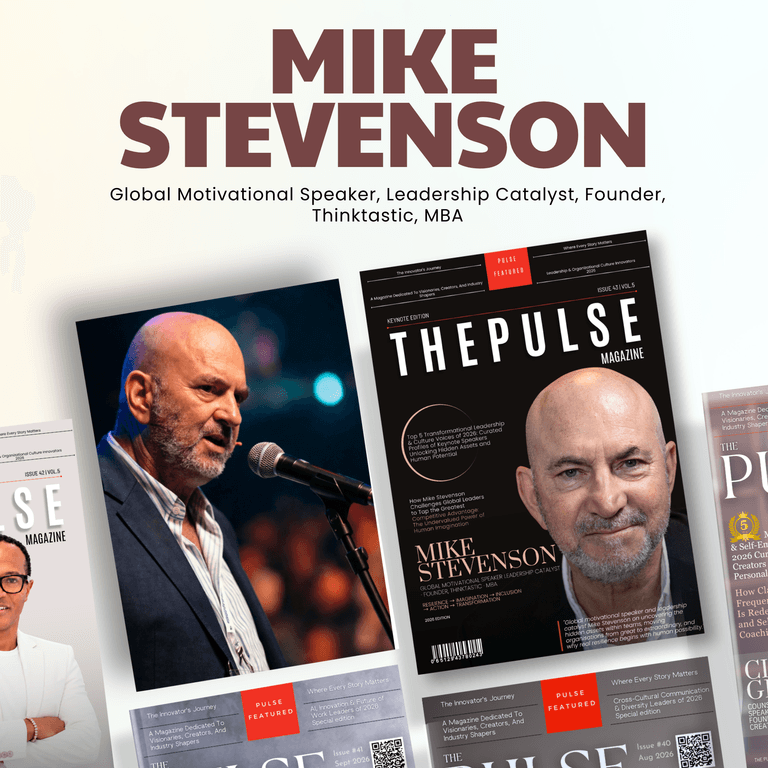
The Undervalued Power of Human Imagination: How Mike Stevenson is Redefining Label-Free Leadership
Global motivational speaker. Founder of Thinktastic. Executive catalyst who earned his MBA 43 years after being expelled from school. In this exclusive Pulse Magazine feature, Mike Stevenson reveals why true organizational resilience doesn't come from squeezing employees harder, but from unlocking the "hidden assets" already in the room. Drawing on his journey from sleeping rough in London to advising multinational boards, he explains why human imagination, not artificial intelligence remains the greatest competitive advantage in business today.
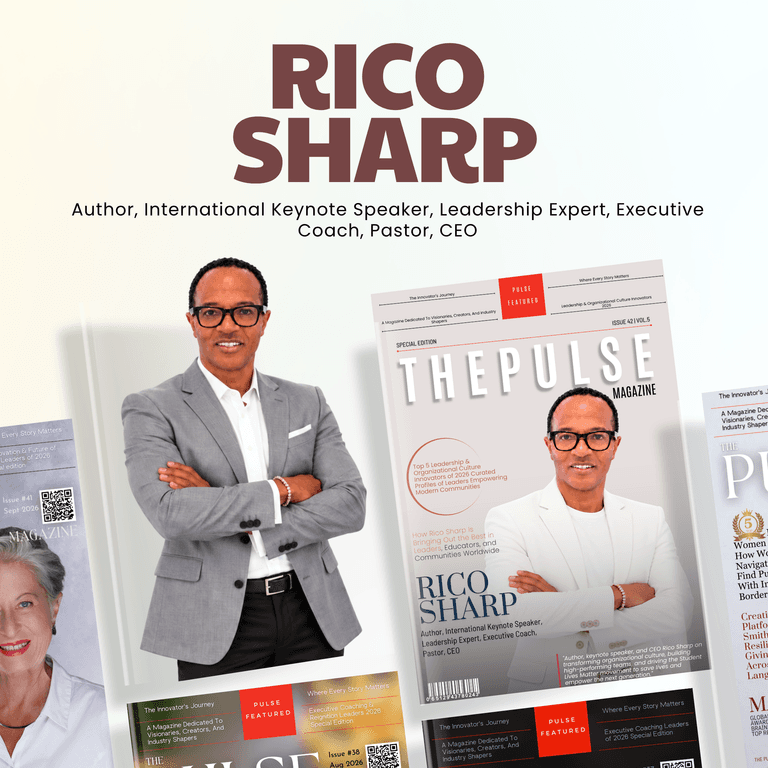
The WHO Factor: How Rico Sharp is Redefining Leadership and Organizational Culture
Author, international keynote speaker, and CEO. Beginning his transformational journey from a prison cell at age nineteen, Rico Sharp has spent three decades empowering leaders and communities worldwide. In this exclusive Pulse Magazine feature, Sharp reveals why organizations must hire for the "WHO" (character and integrity) rather than just the "WHAT" (credentials). He shares the philosophy behind his renowned leadership academies and explains how the Student Lives Matter movement is shifting the national paradigm from reactive crisis response to proactive violence prevention.

Augmenting Humanity: How Dr. CJ Meadows is Redefining Business Education for the AI Era
Harvard DBA. Author of 13 books. IDEO+ExperiencePoint-certified facilitator and innovation ecosystem builder. In this exclusive Pulse Magazine feature, Dr. CJ Meadows reveals why generative AI will not replace human leaders, but rather augment them to focus on what humans do best. Drawing on over three decades of consulting and teaching, she shares the design thinking philosophy shaping executives at S P Jain School of Global Management, and explains why true digital transformation is always 75% human work.