The Fire Is Never Gone, It Is Buried: Allisa Verhille on Reigniting High-Achievers Before Burnout Costs Them Everything
Allisa Verhille has delivered nine-figure results, stood on the stages of Oxford and Columbia, and built organizations from almost nothing to extraordinary scale. But the story that matters most began at a bathroom sink, years into a career that looked perfect from the outside, the night she looked into the mirror and did not recognize the woman looking back.

A Master Certified Coach (MCC), PMP, PMI-ACP, Certified Scrum Master, Certified Six Sigma Black Belt, MBA, and international bestselling author, Verhille's profile in The Pulse Magazine's Executive Coaching & Reignition Leaders 2026 Special Edition traces how that moment became the foundation of the Flame Spiral™ framework, a model built not to fix burnout, but to name what actually causes it.
Who Is Allisa Verhille?
Allisa Verhille is an executive, consultant, performance coach, author, speaker, founder, and Six Sigma Black Belt whose three-decade enterprise leadership career includes measurable, nine-figure results: an estimated $163.6 million in first-year savings delivered at Walmart (completed 10 weeks early and under budget), $12.6 million in cost reductions at CoreLogic, and rural sourcing revenue growth from $910K to $13.4 million in three years with 95% staff retention as Principal at Mercury Network. At Aldor Solutions, she led 1,095% revenue growth and $4.9 million in Six Sigma cost reductions, lifting customer renewals from 40% to 85%.
She holds an MCC, a credential held by approximately the top 4% of coaches worldwide — and has spoken at the University of Oxford and Columbia University. Her published work includes the international bestseller Business, Life, & the Universe (Volumes 16 & 18) and The Fire Within series: The Fire Within, The Flame Within, The Fire Unleashed, with The Fire Ascending, The Flamekeeper's Legacy, and The Eternal Flame forthcoming.
The Question She Asks Everyone
Verhille doesn't open with what she does. She opens with a question: How are you really? And then she waits, because the first answer, she's learned across years of sitting with some of the world's most accomplished people, is almost never the real one. The real one comes a beat later, and it usually sounds something like: is this really what I worked so hard for?
"The sentence, when it finally comes, is almost always the same: 'I don't feel like myself anymore.' I know that sentence from the inside. The first time I heard it, it wasn't from a client. It was mine."
These aren't ungrateful people. They've built careers and families and lives that look extraordinary from the outside. But something inside feels off, and they can't quite name it — because titles and roles are the language of achievement, and Verhille is interested in something else entirely: the person underneath the role, and whether that person still recognizes themselves in the mirror of their own life.
The Wood-Burning Stove That Started It All
The Flame Spiral™ doesn't begin in a coaching session or an MBA classroom. It begins with a man named Pawpaw, Verhille's grandfather, who tended a wood-burning stove with the unhurried attention of someone who understood something profound about fire. He never let it roar until it burned itself out, and he never let it go cold either. He watched it. He fed it a little at a time. At night he banked the coals so there was always something to build from in the morning.
It took Verhille twenty-five years in corporate leadership to fully understand what he'd been teaching her.
"A fire that is only ever burned and never tended will eventually consume the very thing it was meant to warm. I watched it happen in boardrooms for twenty-five years. I traced it back to my grandfather's wood-burning stove. The fire is not gone — it is buried. Buried fires can be tended back to life."
Identity Exhaustion™: Not Burnout, Something More Structural
Verhille's diagnosis of what actually ails high-achievers is more specific than conventional burnout language. She calls it Identity Exhaustion™, not burnout in the conventional sense, though burnout may be the presenting symptom. It's the accumulated weight of an identity built almost entirely from expectations, responsibilities, and the roles a person plays for everyone else carried so long, and so well, that the person underneath the identity has run out of room to breathe.
Most burnout recovery operates as a ladder model: get rested enough, restored enough, regulated enough to climb again. That makes sense if the problem is exhaustion. But Verhille's diagnosis is different, the problem isn't exhaustion. It's displacement: the slow, largely invisible process by which a person drifts away from themselves one obligation at a time, one season of "I'll get back to myself later" at a time, until later has quietly become years.
"Burnout isn't the condition. It's the invitation — to ask not just how you've been working, but how you've been living."
The Flame Spiral™: A Spiral, Not a Ladder
The Flame Spiral™ is a five-phase framework — Ignition, Empowerment, Resilience, Courage, and Legacy with each phase moving through five movements (Remember → Release → Reclaim → Rise → Illuminate) and twelve elements spiraling through all of them. The shape is deliberate and central to how it differs from conventional recovery models.
A ladder implies graduation, a finish line, a final rung. The spiral does not promise that. You don't complete these phases once and arrive somewhere final. Life keeps bringing you back through them, and each time you meet them a little deeper, with a little more understanding of what they're actually asking of you.
"It is a spiral on purpose. Not a ladder. Life keeps bringing you back through these phases, and each time you meet them a little deeper. Most burnout recovery gets you back on the ladder. The Flame Spiral™ gets you back to yourself. There is a difference. The difference is the whole framework."
Why the Last to Admit Are Always the First to Need It
The leaders who most need the Flame Spiral™ are, without exception in Verhille's experience, the last ones to admit it. This isn't accidental, it's the direct consequence of the qualities that made them exceptional: endurance, self-reliance, an identity built around never letting anyone down.
When your entire professional and personal identity is organized around being the person everyone counts on, admitting that you're running on embers doesn't feel like vulnerability. It feels like betrayal of every person whose faith in you is currently holding their world together. So they perform wellness the same way they perform everything else: excellently. They run, meditate, keep their calendar blocked for family time. None of it is dishonest. But underneath the performance is a question they have not yet let themselves ask honestly.
The Book She Could Not Find
Verhille is a serious reader of leadership literature, she's worked through most of the significant books on the shelf and holds genuine appreciation for the quality of thinking in much of it. But after years of reading and coaching the kinds of leaders those books were written for, she arrived at a conclusion that became unavoidable: the leadership shelf is full of books that teach high achievers how to do more, lead better, scale faster, optimize everything. What she couldn't find was a book willing to sit across from an accomplished person and say the direct thing: the way you've been living may be quietly costing you yourself. Not your productivity. You.
So she wrote the book she couldn't find.
"I wrote the book I couldn't find. The leadership shelf teaches high-achievers how to do more. I couldn't find a single book willing to sit across from an accomplished person and say: the way you've been living may be quietly costing you yourself."
The Fire Within series follows the architecture of the Flame Spiral™ itself: The Fire Within covers Ignition and Empowerment, finding the spark again, returning to the question of who you are underneath the roles you've been playing. The Flame Within covers Resilience and Courage, the inheritance we carry, the thresholds we have to cross, and the particular quality of bravery required not to fight harder, but to finally be honest. The Fire Unleashed covers Transformation and Leadership, what actually becomes possible in your work, your relationships, and your sense of self, once the flame is tended instead of consumed.
What Oxford and Columbia Taught Her About Where Burnout Actually Lives
Verhille expected intellectual rigor when she took her work to the stages of Oxford and Columbia, both institutions have earned their reputations for demanding precision and not accepting imprecise claims in place of substance. What she didn't expect was the quality of exhaustion she found looking back at her from those rooms.
The people in the audience at Oxford and Columbia have mastered nearly everything academically, professionally, intellectually. They're among the best-prepared people in the world for the challenges their fields present. And in many cases they're carrying the specific kind of depletion Verhille spends her professional life addressing: exhaustion that comes not from failing at things, but from succeeding relentlessly at them, while the connection between accomplishment and meaning quietly dissolves.
"You are looking out at people who have become world-class at their work, and in many cases have paid for that mastery with something they cannot quite name or retrieve."
What the Reader at Their Lowest Deserves to Believe
Verhille is specific about three things she wants every reader of her work to believe by the time they close the final page, and she insists on all three with equal weight:
Nothing is wrong with you. Burnout is not evidence of weakness or failure. It's one of the most honest conversations your life will ever have with you, a signal that something important needs attention, not a verdict about your capacity or your worth.
The fire is not gone. It is buried. Buried fires can be tended back to life. This isn't reassurance, it's observation. She's watched it happen too many times to doubt it. The spark that drove someone to build what they've built does not disappear. It gets buried under the weight of success, under accumulated obligations and identity drift. But it is there and with the right attention, the right questions, the right quality of honest relationship, it comes back.
Worth was never earned through achievement. This is the claim the entire series is ultimately in service of: the belief that worth must be earned through achievement is not just emotionally costly, it's architecturally incorrect. A life organized around proving something to an audience that's never quite satisfied is inherently unstable. You cannot build a sustainable life on a foundation that requires constant performance.
Public Sector Foundations
Before her enterprise leadership career, Verhille administered more than $119 million annually in federal Job Training Partnership Act programs across 8 Arkansas counties, earning a Letter of Commendation from the Secretary of the U.S. Department of Energy, public sector groundwork that shaped her practical understanding of large-scale organizational systems long before she began naming what those systems cost the people inside them.
Key Takeaways for Leaders and Executives
- Burnout is displacement, not just exhaustion — the slow drift away from yourself, one deferred obligation at a time, rather than a single depleting event.
- The fire is never gone — it's buried — the spark that drove your success doesn't disappear; it gets covered by accumulated performance and identity drift.
- Recovery is a spiral, not a ladder — you don't graduate from these phases once; you return to them repeatedly, each time with deeper understanding.
- The last to admit they need help are usually the ones who need it most — because admitting exhaustion feels like betraying everyone who depends on you.
- Worth was never meant to be earned through achievement — a life built entirely on performance is structurally unsustainable, no matter how excellently it's performed.
Certificate of Recognition
Dedicated to Allisa Verhille
The Pulse Magazine is proud to honor Allisa Verhille — Master Certified Coach, Oxford and Columbia keynote speaker, and creator of the Flame Spiral™ Framework — with our Outstanding Achievement Award for Excellence in Executive Coaching & Burnout Prevention.
Allisa's work has redefined how we think about high performance — proving that the most successful leaders often burn out quietest, and that reigniting them starts with returning to what first drove them. Her Flame Spiral™ Framework is helping executives worldwide recognize burnout before it costs them everything.
"The most successful leaders often burn out quietest. Reigniting them starts with returning to what first drove them." — Allisa Verhille
Congratulations, Allisa, on this well-deserved recognition. 👏
📖 Read her full feature in The Pulse Magazine — Executive Coaching & Reignition Leaders 2026 Special Edition.

This feature is based on Allisa Verhille's profile in The Pulse Magazine's Executive Coaching & Reignition Leaders 2026 Special Edition. Allisa Verhille is a Master Certified Coach, international bestselling author, and creator of the Flame Spiral™ framework.
Read more from The Pulse Magazine: thepulsemagazines.com | Follow us on LinkedIn and Instagram @thepulsemagazines
Related Stories
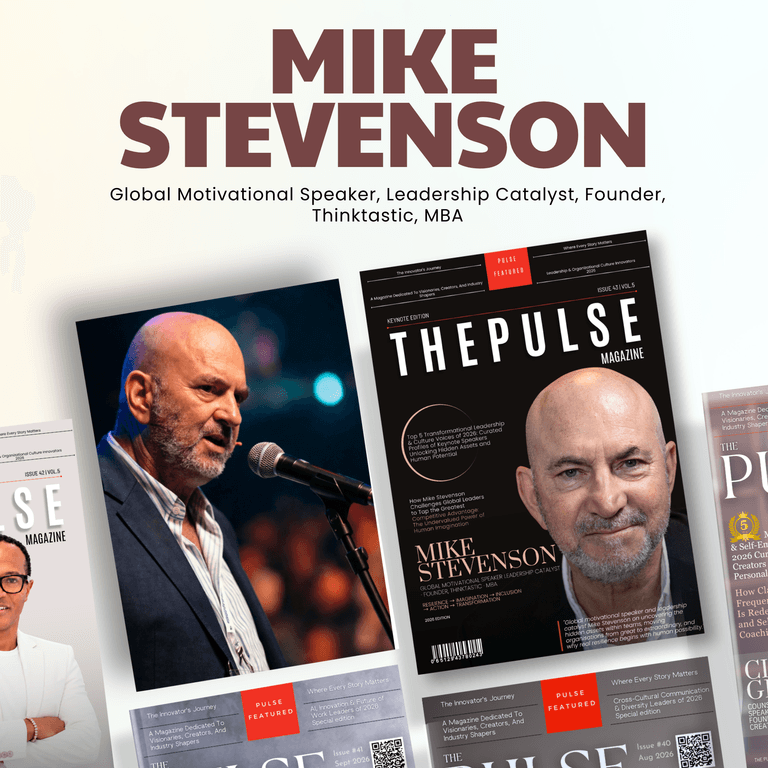
The Undervalued Power of Human Imagination: How Mike Stevenson is Redefining Label-Free Leadership
Global motivational speaker. Founder of Thinktastic. Executive catalyst who earned his MBA 43 years after being expelled from school. In this exclusive Pulse Magazine feature, Mike Stevenson reveals why true organizational resilience doesn't come from squeezing employees harder, but from unlocking the "hidden assets" already in the room. Drawing on his journey from sleeping rough in London to advising multinational boards, he explains why human imagination, not artificial intelligence remains the greatest competitive advantage in business today.
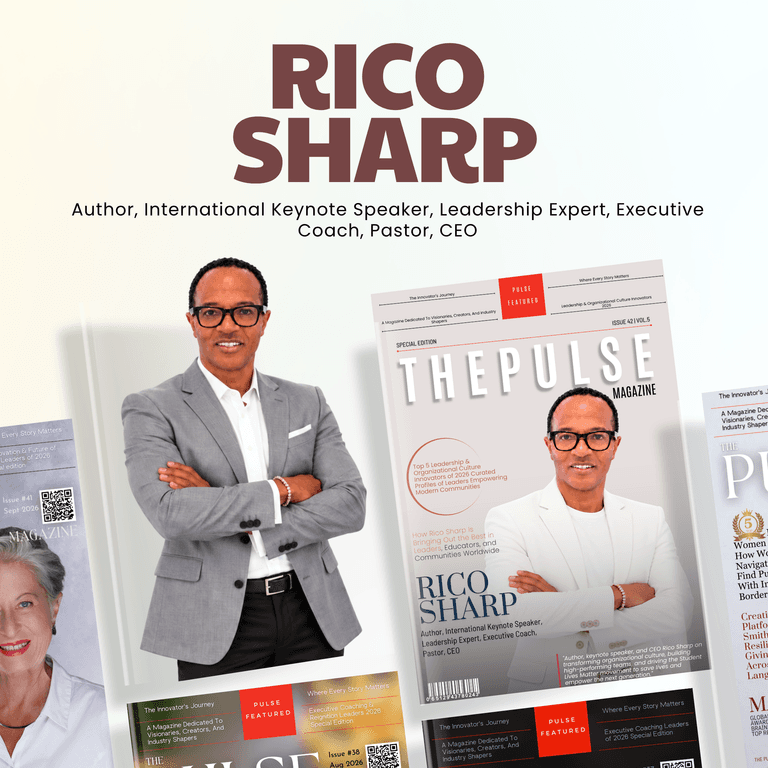
The WHO Factor: How Rico Sharp is Redefining Leadership and Organizational Culture
Author, international keynote speaker, and CEO. Beginning his transformational journey from a prison cell at age nineteen, Rico Sharp has spent three decades empowering leaders and communities worldwide. In this exclusive Pulse Magazine feature, Sharp reveals why organizations must hire for the "WHO" (character and integrity) rather than just the "WHAT" (credentials). He shares the philosophy behind his renowned leadership academies and explains how the Student Lives Matter movement is shifting the national paradigm from reactive crisis response to proactive violence prevention.

Augmenting Humanity: How Dr. CJ Meadows is Redefining Business Education for the AI Era
Harvard DBA. Author of 13 books. IDEO+ExperiencePoint-certified facilitator and innovation ecosystem builder. In this exclusive Pulse Magazine feature, Dr. CJ Meadows reveals why generative AI will not replace human leaders, but rather augment them to focus on what humans do best. Drawing on over three decades of consulting and teaching, she shares the design thinking philosophy shaping executives at S P Jain School of Global Management, and explains why true digital transformation is always 75% human work.